 AIVideoFree
GPT Image 2 AI Image Generator
OpenAI's image flagship: it thinks before it draws — planning layout and checking content — and renders text you could send to a printer. Type a prompt below and try it.
Developer
OpenAI
Ships as
ChatGPT Images 2.0 / gpt-image-2
Signature
Native thinking mode
Text in image
Print-ready · multilingual
Batches
8 images, consistent
Max output
2K
Tier here
Paid credits
Successor
Our one-line verdict: the layout pick. When the image is really a document — a menu, a poster, a UI mock, anything where words and structure must survive scrutiny — this model plans it before it draws it.
GPT Image 2 arrived in April and took the #1 spot in every Image Arena category within twelve hours — by 242 points, the largest margin the leaderboard had ever recorded. The architectural reason is the interesting part: it's OpenAI's first image model with native reasoning, planning the layout and checking the content before rendering, which is why its party trick is the historically impossible one — a restaurant menu where every dish is spelled correctly and every price aligns. Two timely notes: OpenAI retired the old DALL·E on August 30 and this is the model that replaced it — and as of September 8 it has a successor of its own, GPT Image 2.5 , which keeps this architecture and roughly halves the wait. This page stays because the arena record, the 8-image batches and the reasoning behaviour documented here are still exactly what you get; the newer page covers what changed.
Where GPT Image 2 wins — and where it doesn't
Judged from our own renders and the published record, revised as the facts move — that's a feature of this page, not a disclaimer.
Genuinely strong
• Thinking before drawing.
Native reasoning plans composition and verifies content pre-render — complex layouts, multi-element scenes and instruction stacks land on the first try far more often.
• Print-ready text.
Menus, posters, packaging, UI mocks — multilingual, correctly spelled, properly formatted. The failure mode that defined AI images for years, treated as solved surface area.
• Consistent 8-image batches.
One request, eight variations holding character and style — the iteration and A/B workflow built into the model rather than bolted on.
• The document-image lane.
Anything that's secretly a document — certificates, labels, slides, mock ads — is where the reasoning layer visibly outclasses pattern-matching rivals.
Known limits
• Thinking costs time.
Reasoning adds real latency versus flash-class rivals. For rapid ideation, draft elsewhere and bring the final layout here.
• 2K ceiling.
Nano Banana's 4K and print workflows beyond 2K need upscaling or a different model. For most screens, irrelevant; for large-format, decisive.
• An April crown in an August market.
The +242 margin was measured before Seedream 5.0 Pro and the summer wave landed. Still elite — but treat 'largest lead ever' as history, not the current standings.
• No web grounding.
It reasons from knowledge, not live search — a current product or this-morning's-news visual can come back dated. Nano Banana 2's grounding covers that lane.
Three prompts that show what it's for
Copy into the generator above, swap the brackets, render.
The menu test — text under pressure
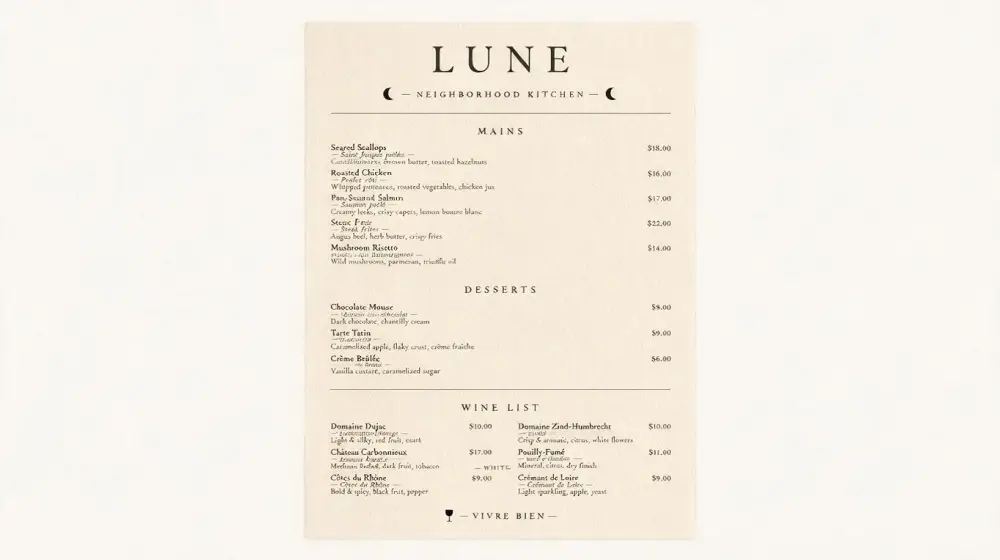
"A print-ready bistro menu, A4 portrait: '[LUNE — Neighborhood Kitchen]' as the header, five mains with prices ($14–$22, right-aligned), three desserts, a short wine list, a French translation under each dish name. Warm cream paper, classic serif typesetting, no spelling errors."
Dense structured text with formatting rules is exactly what thinking mode is for — the model drafts the layout before rendering a pixel. The demo beside the generator is this prompt.
The batch of eight
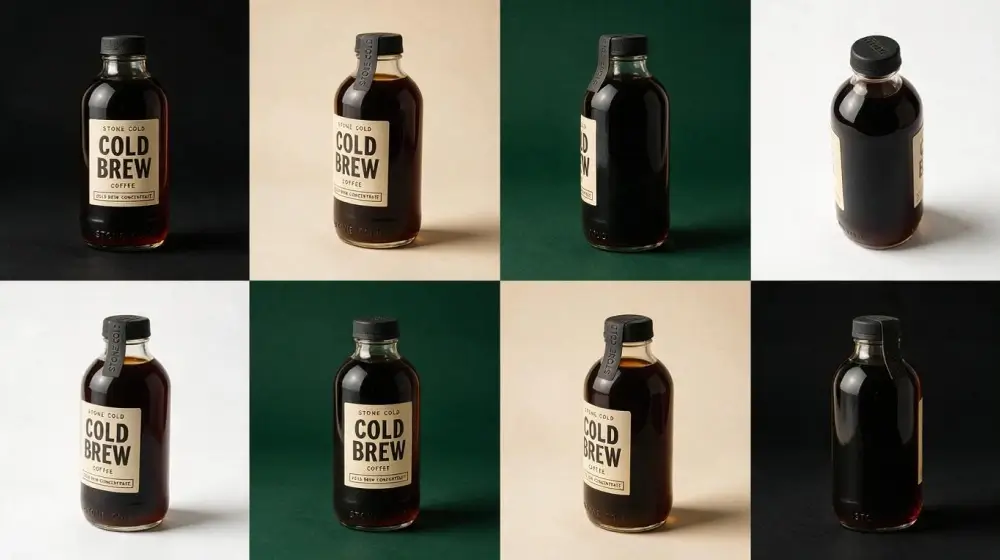
Batch ×8 → "[Product] hero shot, studio lighting: eight variations exploring angle and backdrop color — same product scale, same label orientation, same shadow softness in all eight."
Naming what must stay identical is what makes a batch a controlled experiment instead of eight lotteries. Pick the winner, then re-render it alone at full size.
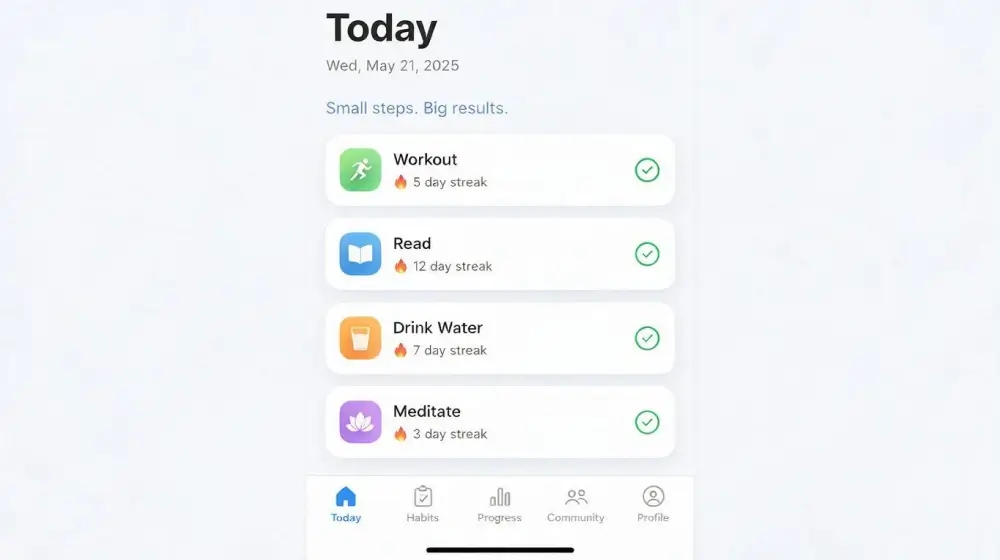
The UI mock that reads
"A clean mobile app screen for [a habit tracker]: header 'Today', four habit cards each with an icon, name and streak count, a bottom tab bar with five labeled icons — all labels legible and correctly spelled, iOS-style spacing, light mode."
Interfaces are text-dense documents in disguise. Enumerating the elements engages the planner; 'legible and correctly spelled' sets the bar the text renderer will actually hit.
GPT Image 2 vs Nano Banana 2 vs Seedream 5.0 Pro
Three flagships, three theories: reasoning-first, speed-first, editability-first. Same prompts across all three, judged by what we'd ship. All three selectable in the generator above.
How it got here
GPT Image 2.5
the September refinement: up to 50% lower latency, steadier multi-turn edits, Flare and Sunburst tiers. Same family, same planning behaviour. Full page: gpt-image-2-5.
GPT Image 2
ChatGPT Images 2.0, launched April 21: native thinking, #1 across every arena category by +242 within twelve hours, API as gpt-image-2. The version in the generator above.
GPT Image 1.5
the efficiency generation: faster, cheaper edits that kept details intact; the best public OpenAI image model until April.
GPT Image 2 questions, answered straight
OpenAI's flagship image model, launched April 21, 2026 as ChatGPT Images 2.0 (API name gpt-image-2). It's the first OpenAI image model with native reasoning — it plans layout and checks content before rendering — with print-ready multilingual text, 8-image consistent batches and flexible sizes up to 2K. It debuted #1 in every Image Arena category by the largest margin ever recorded.


