 AIVideoFree
Kling 4.0 AI Video Generator
Kuaishou's new flagship, live since October 15: thirty seconds in one take at up to 4K and 21:9, with Omni Reference pulling fifteen inputs into a single generation. Type a prompt below and try it.
(JPG, JPEG, PNG, WEBP, max 30 MB)
Developer
Kuaishou
Launched
Oct 15, 2026 · full model
Duration
3–30 s single pass
Max output
4K · up to 21:9
Omni Reference
15 inputs in one task
Keyframes
Up to 10
Prompt length
8,000 tokens
Our one-line verdict: the reference pick for long shots. Thirty seconds, fifteen reference inputs and an eight-thousand-token brief in one generation — nothing else here takes that much direction at once.
Kling 4.0 went fully live on October 15, and what makes it a generational change rather than a point release is that three numbers moved together: clip length to thirty seconds, keyframes to ten, and Omni Reference to fifteen combined inputs — images, video clips, saved subjects and voice samples, in a single task. Add an 8,000-token prompt window and the practical shift becomes clear: this is the model you hand an entire brief to, rather than one you coax a shot out of. Kuaishou's own framing is steadier large-scale motion, and tracking and orbit shots are where that shows. Two things on the spec sheet aren't here yet — 10-bit HDR and two-minute extension are announced as coming — and independent benchmarks don't exist yet either, so treat the superlatives below as first-fortnight reporting.
Where Kling 4.0 wins — and where it doesn't
Judged from our own renders and the published record, revised as the facts move — that's a feature of this page, not a disclaimer.
Genuinely strong
• Omni Reference at fifteen inputs.
Ten images, five video clips, seven subjects, plus voice samples — combined in one generation. The largest reference intake we host, and the reason a whole character kit now fits in a single task.
• Thirty seconds that hold together.
One unbroken pass, with Kuaishou targeting steadier large-scale motion. Tracking and orbit shots — the ones that used to drift at the twenty-second mark — are the visible beneficiaries.
• Eight-thousand-token prompts.
Room for a full shot list, a character bible and the sound design in one brief. Models that accept this much direction are rare; models that act on it are rarer.
• 21:9 at 4K.
The widest cinematic frame at the highest resolution in our video lineup, without the crop-and-pray workflow that ultrawide used to require.
Known limits
• Two headline specs aren't live.
10-bit HDR and the two-minute video extension are announced as coming, not shipping. We'll move them out of this column when they land.
• No independent benchmarks.
Launched a week ago. Everything here comes from Kuaishou's release notes, launch coverage and our own renders — no third-party scores exist yet.
• Fifteen references invite over-direction.
A big intake is not a free upgrade: conflicting references produce muddier results than three good ones. Start small and add.
• Long takes cost real money.
Thirty seconds at 4K prices well above a ten-second 1080p render. Draft the shot short and cheap, then commit once.
Three prompts that show what it's for
Copy into the generator above, swap the brackets, render.
The unbroken orbit
"One continuous 30-second shot, 21:9: the camera orbits a [potter at her wheel] as she centres the clay, opens the form and pulls the walls up. Daylight from a high window shifting as we move. Wheel hum, wet clay, her breathing."
A full orbit over thirty seconds is the stress test for the stability Kuaishou built this release around — if the subject and the room hold through 360 degrees, the model is doing its job. The demo beside the generator is this prompt.
The reference kit, used properly
Upload: 4 images of the subject, 1 clip of the movement you want, 1 voice sample
"She walks the length of the workshop and speaks the line from the voice reference. Match her face, apron and gait to the references; keep the workshop lighting as shot."
Mixing input types is what Omni Reference is for — stills carry identity, the clip carries motion, the sample carries voice. Naming which reference governs what stops them fighting each other.
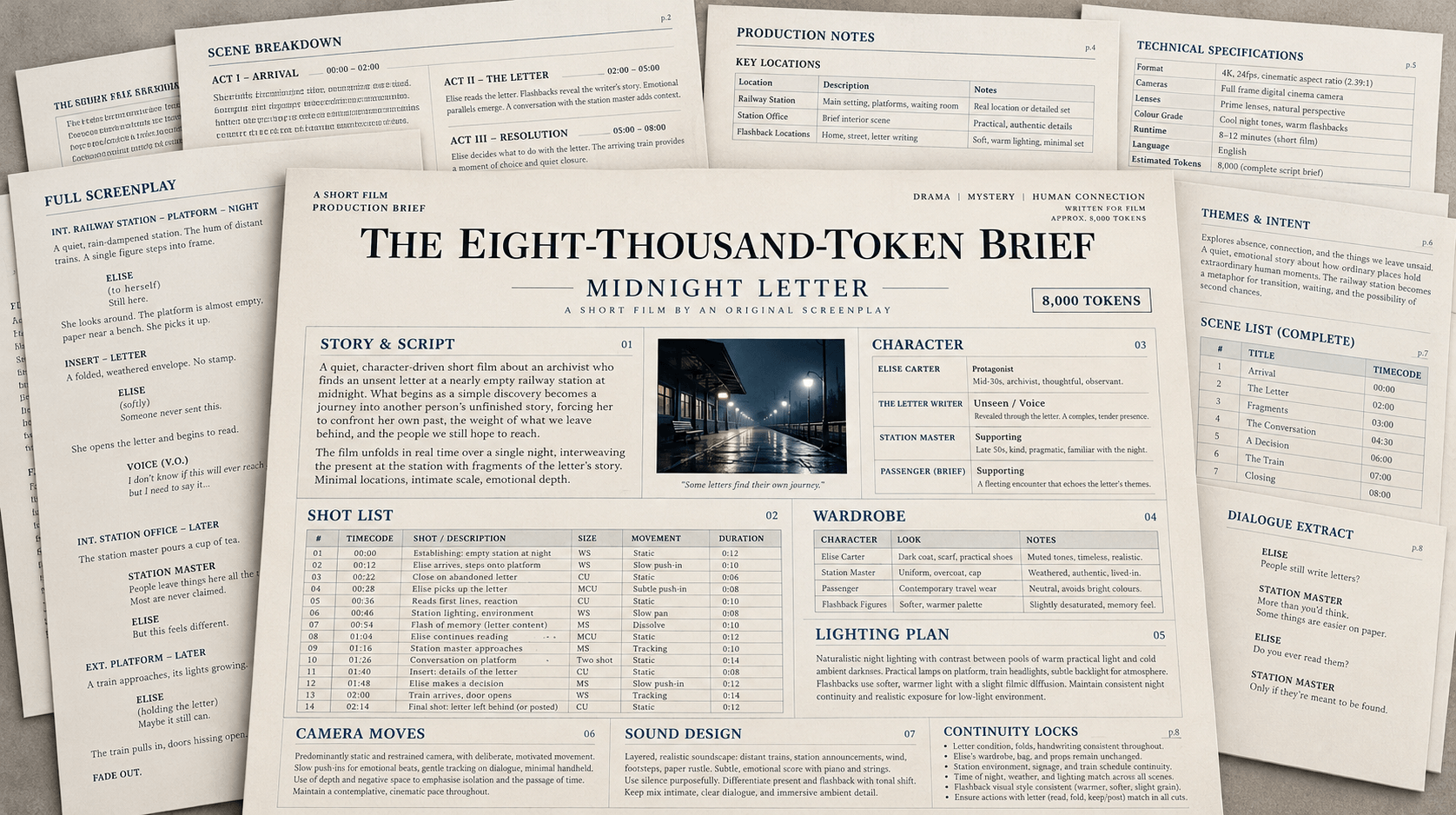
The eight-thousand-token brief
Write the full thing: shot list, character description, wardrobe, lighting plan, camera moves per beat, sound design, and what must not change.
Most models punish long prompts; this one has room for a real brief. Keep it structured — one paragraph per element, not one long run-on — and the extra specificity actually lands.
Kling 4.0 vs Kling 3.0 vs Seedance 2.5
The upgrade decision, plus the other thirty-second model. Same prompts across all three, judged by what we'd ship — provisionally for the newcomer. All three selectable in the generator above.
How it got here
Kling 4.0
the full model, globally launched: 30-second single takes, Omni Reference across 15 inputs, 10 keyframes, 8,000-token prompts, 21:9 at 4K, stereo audio with lip-sync. Announced September 27 with Flash early access from September 28. The version in the generator above.
Kling 3.0 and Kling O3
the generation that split the family into a prompt-led line (Director Mode, 4K) and a reference-led one (MVL identity locking). Both still selectable here; their pages cover when they're still the right call.
Kling 1.x–2.x
the releases that made Kling a global name and the first Chinese models to trade blows with Western flagships.
Kling 4.0 questions, answered straight
Kuaishou's fourth-generation video model, announced September 27, 2026 and fully launched globally on October 15. It generates 3 to 30 second clips in a single pass at up to 4K and 21:9, accepts up to 10 keyframes, takes 8,000-token prompts, and its Omni Reference system combines up to 15 inputs — images, video clips, subjects and voice samples — in one task.