 AIVideoFree
Nano Banana 2 AI Image Generator
Google's default image model: Pro-level fidelity at Flash speed, 512px to 4K, and characters that stay themselves across a whole workflow. Type a prompt below and try it.
Developer
Google DeepMind
Base
Gemini 3.1 Flash Image
Resolution
512px – 4K
Aspect ratios
14
Consistency
5 characters · 14 objects
Grounding
Web image search
Tier here
Paid credits · Lite free
Our one-line verdict: the default for a reason. Pro-level output at Flash speed and price — start every image job here, and escalate only when a specific page tells you why.
Nano Banana 2 is what happened when Google stopped making you choose between its fast image model and its good one: built on Gemini 3.1 Flash, it carries most of Nano Banana Pro's fidelity at Flash speed and price, which is why Google made it the default across the Gemini app, Search and Ads within a day of its February launch. The two capabilities that matter most in practice: character consistency that holds up to five characters and fourteen objects across a workflow — storyboards and brand sets stop drifting — and image-search grounding, which lets it pull real visual references from the web before it draws.
Where Nano Banana 2 wins — and where it doesn't
Judged from our own renders and the published record, revised as the facts move — that's a feature of this page, not a disclaimer.
Genuinely strong
• The speed-quality trade, dissolved.
Pro-level fidelity at Flash latency and price. The reason it's Google's default everywhere is the reason it should be your first attempt at almost any image job.
• Workflow-grade consistency.
Up to 5 characters and 14 objects held stable across generations — the storyboard, brand-set and product-series work that used to require a references-heavy specialist.
• Image-search grounding.
It can consult real web imagery before drawing — a specific landmark, a current product, a real material — closing the gap between 'plausible' and 'accurate.'
• Full production range.
512px thumbnails to 4K hero images across 14 aspect ratios, from one prompt vocabulary. One model covers the whole asset sheet.
Known limits
• Maximum factual fidelity is Pro's job.
Google's own split: dense infographics, exact diagrams and text-heavy layouts where every fact must land go to Nano Banana Pro. This model is the generalist, not the specialist.
• Five characters is a cap, not a suggestion.
Ensemble scenes beyond five named characters start trading identities. Plan crowd scenes as background texture, not as ten protagonists.
• SynthID is always on.
Every output carries Google's invisible watermark. Fine for almost everyone; relevant if your pipeline forbids provenance marks.
• Grounding needs steering.
Web-image grounding is powerful but literal — ungrounded prompts about famous places can come back generic, over-grounded ones come back like stock. Name what should be real; free what should be imagined.
Three prompts that show what it's for
Copy into the generator above, swap the brackets, render.
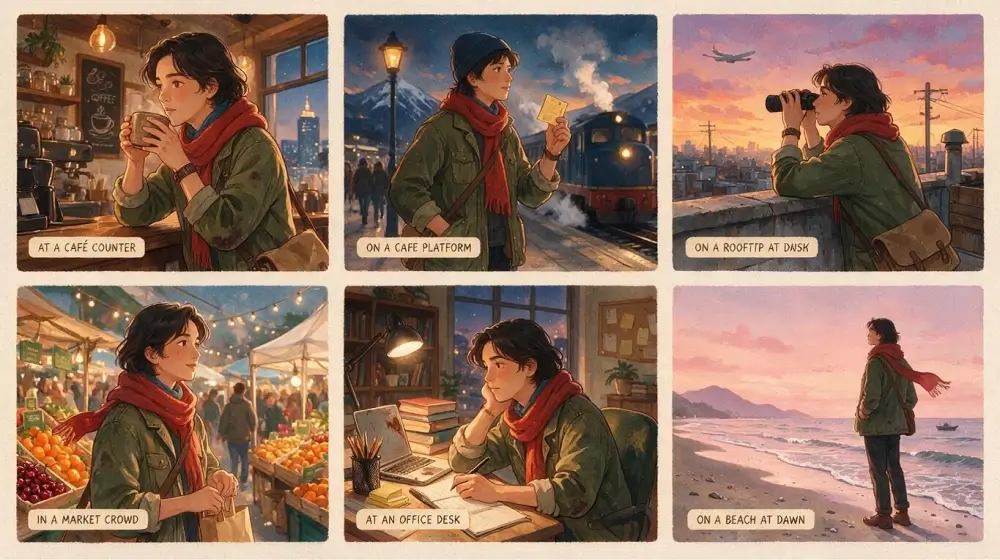
The consistency stress test
"A six-panel storyboard, same illustrated character in every panel: a [courier with a red scarf] — at a café counter, on a train platform, on a rooftop at dusk, in a market crowd, at an office desk, on a beach at dawn. Consistent face, build and scarf throughout; warm editorial illustration style."
Six scenes in one prompt is the consistency system's home turf — naming the anchor features ('face, build and scarf') tells it what must not drift. The demo beside the generator is this prompt.

The grounded location shot
"A product photo of [our ceramic mug] on a café table with the real Ponte Vecchio visible through the window behind it, morning light, shallow depth of field — the bridge should look like the actual bridge."
'The actual bridge' is the phrase that engages image-search grounding: it consults real imagery instead of improvising a generic landmark. Ground the setting, keep the product from your reference upload.
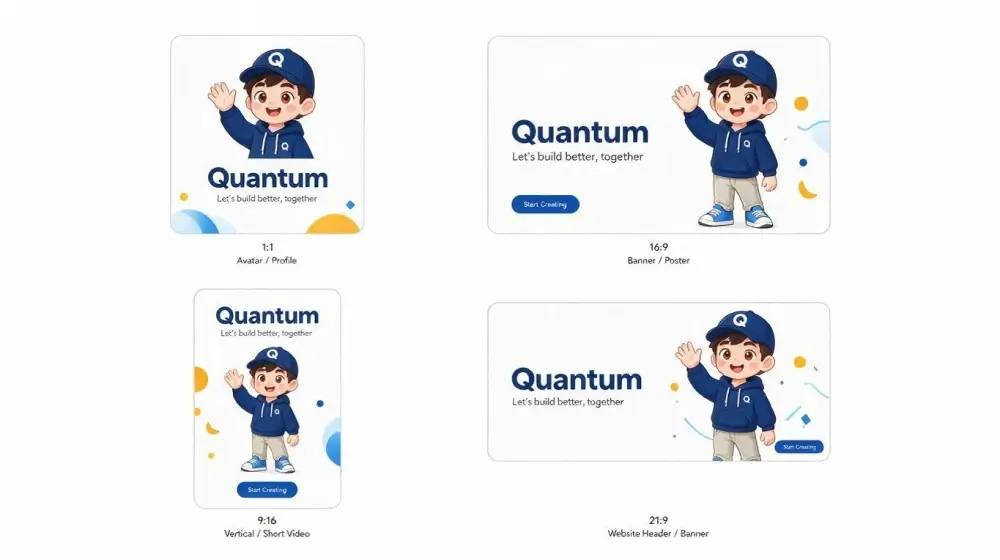
The full asset sheet
"[Brand mascot] waving, flat vector style on transparent-look white: generate at 1:1 for avatar, 16:9 for banner, 9:16 for story, 21:9 for site header — same pose, same proportions in all four."
One prompt, four ratios, zero drift — the everyday job this model does cheaper and faster than anything above it. Batch the ratios rather than re-prompting per size.
Nano Banana 2 vs Nano Banana Pro vs GPT Image 2
The default against its own specialist sibling and April's arena champion. Same prompts across all three, judged by what we'd ship. All three selectable in the generator above.
How it got here
Nano Banana 2
(Gemini 3.1 Flash Image) — launched February 26, default across Gemini, Search, Ads and Flow within a day; GA for enterprise in May; video-file input added in preview. The version in the generator above.
Nano Banana Pro
(Gemini 3 Pro Image) — the high-fidelity tier: reasoning-backed accuracy, studio controls, 4K. Still current for factual work; its own page covers when it earns the premium.
Nano Banana
(Gemini 2.5 Flash Image) — the viral original: 13 million new users in four days, five billion images by October. Now legacy; Google recommends the 2-generation models in its place.
Nano Banana 2 questions, answered straight
Google's current mainline image model — technically Gemini 3.1 Flash Image, launched February 26, 2026. It merges Nano Banana Pro's fidelity with Flash-tier speed and price: 512px to 4K output, 14 aspect ratios, consistency for up to 5 characters and 14 objects per workflow, and image-search grounding that consults real web imagery before drawing. It's the default image model across Google's own products.

